Influencer Management Agency: How It Works, Earns and Differs
How an influencer management agency wins brand deals, earns commission, protects creator rights, differs from a model agency, and which software it needs.

An influencer management agency represents content creators the way a talent agency represents performers: it finds and negotiates brand deals, protects the creator's rights, handles contracts and invoicing, and helps plan the creator's longer career. The business looks familiar to anyone who has run a model board, but the money, the rights and the daily work differ in ways that matter when you set prices, write contracts or choose software.
This guide explains how a creator management agency works from the inside: where revenue comes from, how a brand deal moves through the team, which licensing and disclosure rules can apply in the US, UK and EU, and what tools the team needs. It is written for agency owners and managers, including model agencies adding a creator division.
In short
- Revenue is mainly commission on brand deals, plus commission on other income the management agreement covers.
- The creator owns the audience and the channels, so usage rights, whitelisting and exclusivity drive the value of each deal.
- In some places, procuring work for talent needs a license, and in the US a company that pays and directs influencers can share responsibility for ad disclosure.
- Software needs center on a roster database, brand-facing packages, deliverable tracking, permissions and data protection.
What is an influencer management agency?
An influencer management agency, also called a creator management or talent management agency, works for the creator. It is different from an influencer marketing agency, which works for the brand and hires creators for campaigns. The two meet on every deal: the marketing agency sends the brief, your manager answers with a creator, a quote and terms.
Typical services include:
- Inbound deal handling: filtering brand requests, quoting and negotiating.
- Outbound sales: pitching creators to brands and agencies that fit their audience.
- Contracting: deliverables, usage, exclusivity, approvals and payment terms.
- Delivery: content calendars, approvals, posting checks and reporting.
- Finance: invoicing brands, collecting payment and paying creators.
- Career planning: category focus, longer partnerships, products and licensing.
How does an influencer management agency make money?
Most agencies earn a commission on income they bring in or manage. The percentage, the income it applies to and whether it is taken from gross or net are set in the management agreement and vary between agencies, markets and creator sizes. There is no single market rate, so treat any figure you hear as one agency's choice.
| Revenue stream | How the agency earns | What drives the amount |
|---|---|---|
| Brand deals | Commission on the creator's fee | Deliverables, usage, exclusivity, audience fit |
| Usage renewals and whitelisting | Commission on renewal and licensing fees | Media, territory, duration |
| Affiliate and codes | Commission if the agreement covers it | Sales volume, rates set by the brand |
| Appearances and events | Commission on appearance fees | Time, travel, exclusivity |
| Products and licensing | Commission or a negotiated share | Who funds and runs the product |
| Agency as principal | Margin between the brand fee and the creator fee | Risk the agency carries, disclosed to the creator |
Platform payouts such as ad revenue sharing are a special case: many agencies leave them out of commission because the agency did not secure them. Whatever you choose, write it down. Disputes usually come from income nobody listed.
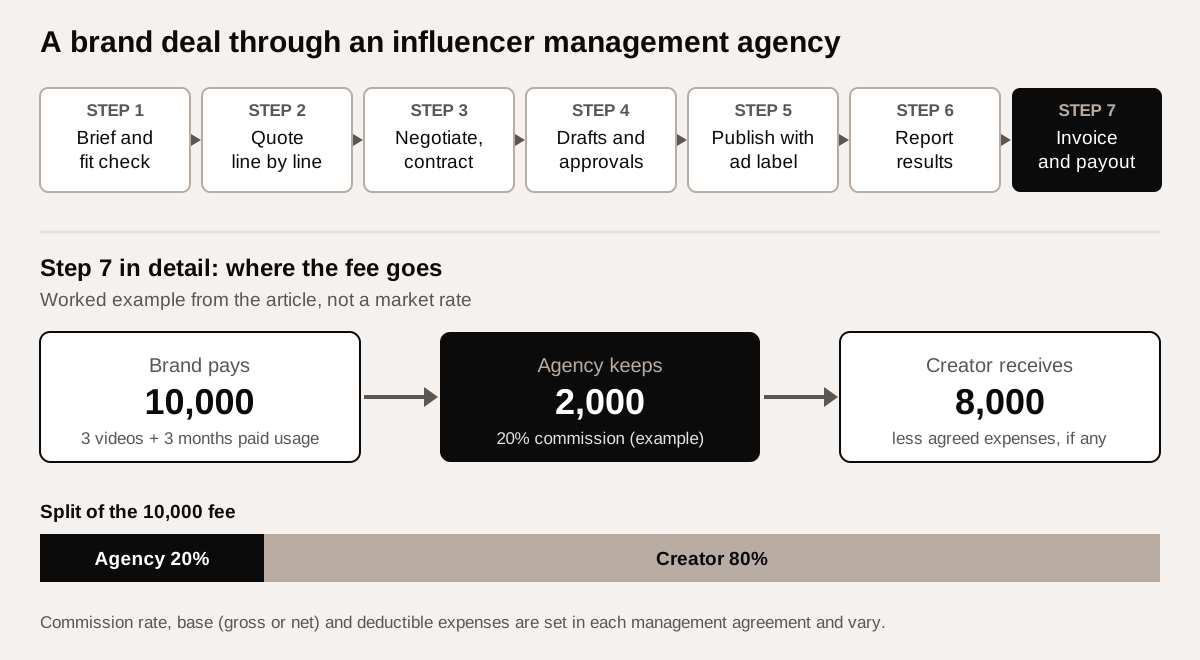
Worked example, not a market rate: a brand pays 10,000 for a three-video package with three months of paid usage. If the management agreement sets 20 percent commission on gross brand income, the agency keeps 2,000 and passes 8,000 to the creator, less any expenses the agreement allows the agency to deduct.
Try it: Commission split calculator, to show a creator exactly how a fee splits before they sign.
How a brand deal moves through the agency
Agencies that scale treat each deal as a pipeline with clear owners. A common flow:
- Brief: the brand or its agency sends a request; the manager checks fit, dates and conflicts with existing exclusivities.
- Quote: separate lines for content, usage, whitelisting and exclusivity.
- Negotiation and contract: agree terms, using an influencer contract template as the base.
- Production: drafts, review rounds and approvals on fixed deadlines.
- Publication: the post goes live with the agreed ad label; the agency checks it.
- Reporting: insights screenshots or links as the contract requires.
- Invoice and payout: the brand pays, the agency deducts commission and pays the creator on the agreed timeline.

How is it different from a model agency?
Many model agencies now represent creators, and the skills overlap: negotiation, scheduling, contracts, client care. The economics do not.
| Point | Model agency | Influencer management agency |
|---|---|---|
| What the client buys | The model's time and image for a shoot or show | Content plus access to the creator's audience |
| Main price drivers | Day or half-day rate, usage, exclusivity | Deliverables, audience, usage, whitelisting, exclusivity |
| Who controls distribution | The client publishes | The creator publishes on their own channels |
| Typical development | Tests, portfolio, placement in other markets | Content strategy, category focus, audience growth |
| Agency to agency | Mother agency places the model with other agencies | Less common; brand-side agencies are the usual counterpart |
| Disclosure duty | Rarely relevant to the model | Central to every paid post |
If your board is used to mother agency placements and option-confirmation booking, expect your booking agents to need new habits: tracking posting windows, live periods and usage end dates instead of only shoot dates.
Rights an influencer manager has to protect
The creator's channels and audience are the asset, so the manager's job is to stop them being given away by accident.
- Content ownership and license: the brand contract should grant a defined license, not ownership, unless a buyout is priced. See usage and buyout fees for how media, territory and duration change the price.
- Whitelisting: ads run under the creator's name, so agree ad copy approval, duration and removal of access.
- Exclusivity: narrow categories, named competitors, fixed dates, separate fee.
- Name and likeness: no use of the creator's name, face or voice beyond the contract.
- Account access: the creator keeps ownership of their accounts. If the agency needs access, use platform permission tools rather than shared passwords, and remove access when the relationship ends.

Licensing, disclosure and data: the legal side
Rules depend on where the agency and the creator are based and on what the agency actually does. Have your setup checked by a local lawyer. Three areas come up most.
Licensing
In California, no one may carry on the occupation of a talent agency without a license from the Labor Commissioner (Labor Code section 1700.5). The definition turns on procuring, or attempting to procure, engagements for artists, and the list of artists includes models and other people providing professional services in entertainment. A business called "management" that negotiates bookings should therefore check whether it needs a license. Other US states have their own rules. In the UK, the Employment Agencies Act 1973 and the Conduct of Employment Agencies and Employment Businesses Regulations 2003 regulate agencies; Schedule 3 of the Regulations lists performers and photographic or fashion models among occupations where agencies may charge work-seekers fees. EU member states regulate private employment and talent agencies nationally.
Disclosure
The FTC says a company that recruits, pays and directs influencers could be liable if endorsements are deceptive or fail to disclose a material connection, and that it needs reasonable programs to train and monitor those influencers. In the UK, the CMA's guidance tells creators to label paid content clearly as an ad, upfront. Build a disclosure check into your publication step.
Data protection
You hold creators' personal data, contracts, payment details and often audience statistics. If you operate in or serve the EU, the GDPR applies, including data minimization, storage limits and security of processing. The UK applies its own version of the same rules.
What the management agreement should cover
The agreement between your agency and each creator sets the ground rules for everything above. The key clauses are term, exclusivity of representation, which income is commissionable, commission after the term ends on deals you secured, expenses, how quickly you pay the creator, account access and termination. Our talent management agreement guide goes through each clause. Creators with modeling careers may also have an agreement with a model agency; check both agreements do not claim commission on the same work.
What software does an influencer management agency need?
Small teams start with spreadsheets and email. That stops working once several managers share a roster and brands expect fast, polished replies. These are the needs that matter, whatever product you choose.
| Need | Why it matters | What to check |
|---|---|---|
| Roster database | One place for profiles, stats, rates and exclusivities | Custom fields for platforms and audience data |
| Applications and inbound | New creators apply; requests need triage | Form on your website, replies from templates |
| Brand-facing packages | Brands want a curated shortlist, not a list of links | Branded pages, expiry, knowing when they were opened |
| Deal and deliverable tracking | Posting windows, approvals, usage end dates | Calendar view, reminders |
| Invoicing and payouts | Pass-through money needs a clear trail | Commission per deal, payout dates |
| Roles and security | Not every staff member needs every contract | Role permissions, two-factor login, audit log |
| Data protection | GDPR and UK rules on retention and security | Hosting location, backups, deletion settings |
Some agencies use a dedicated agency system for the roster side. Agency OS, for example, keeps talent profiles with custom fields, takes applications through a form embedded on your website, and sends brands branded packages with an expiry date and view tracking. Deal accounting may still sit in your finance tool. Our guide to talent management software sets out how to compare options.

How to set up a creator management division, step by step
- Define your category. Pick the niches your team understands, for example fashion, beauty or lifestyle, and the brands you can sell to.
- Check licensing. Confirm whether procuring work for creators needs a license where you and your talent are based.
- Write the management agreement. Commission base, commissionable income, payout timing, term and exit.
- Build the brand contract template. Deliverables, usage, exclusivity, approvals, disclosure, payment.
- Set up the roster and inbound flow. Profiles, application form, reply templates, packages for brands.
- Set a disclosure and posting check. Who checks each post, by when, and how fixes are requested.
- Agree money handling. Separate client money records, payout schedule, statements to creators.
If you are building the whole business from scratch, our guide on how to start a modeling agency covers company setup, insurance and first contracts.
Mistakes to avoid
- Quoting one fee for content, usage and exclusivity together, so renewals cannot be priced.
- Commission clauses that do not say which income is covered.
- Holding creators' passwords instead of using platform permission tools.
- Assuming the brand handles disclosure.
- Calling the business "management" to avoid licensing questions without checking the law.
- Paying creators late because brand payment terms were not matched in the management agreement.
- Keeping rejected applicants' data indefinitely.
Frequently asked questions
What does an influencer management agency do?
It represents creators: it finds and negotiates brand deals, handles contracts, approvals and invoicing, checks posts, and plans longer partnerships. It works for the creator, unlike an influencer marketing agency, which works for brands.
How much commission does an influencer management agency take?
It varies by agency, market and creator, and is set in the management agreement. Check the percentage, whether it applies to gross or net income, and which income types it covers.
Does an influencer manager need a license?
It depends on the jurisdiction and the activity. In California, procuring engagements for artists, a group that includes models, requires a talent agency license. The UK and EU countries have their own rules. Get local advice.
Can a model agency also manage influencers?
Yes, many do. Expect different pricing, contracts built around deliverables and usage, and new tasks such as posting checks and disclosure monitoring.
Who owns the content a creator makes for a brand?
Whatever the contract says. Agencies commonly keep ownership with the creator and grant the brand a license for defined media, territory and duration, unless a buyout is priced.
Is the agency responsible if a creator does not disclose an ad?
It can be. The FTC says companies that pay and direct influencers need training and monitoring programs and could be liable. Build disclosure checks into your workflow.
Sources
- Federal Trade Commission, FTC's Endorsement Guides: What People Are Asking, 2025
- Competition and Markets Authority, Social media endorsements: guidance for content creators, 2025
- California Labor Commissioner's Office, How to Obtain a Talent Agency License, 2024
- legislation.gov.uk, Employment Agencies Act 1973
- legislation.gov.uk, Conduct of Employment Agencies and Employment Businesses Regulations 2003, Schedule 3
- EUR-Lex, Regulation (EU) 2016/679 (General Data Protection Regulation), 2016