What Does a Casting Director Do? Role, Process and Career
What a casting director does in fashion and commercial work, how the casting process runs with agencies, who pays, and how to become a casting director.

A casting director is the person a brand, production company or director hires to find and secure the right people for a job. In fashion and commercial work that means reading the brief, asking agencies for proposals, running the casting sessions, guiding the client to a decision and handing over to the agency for options and confirmation. For agencies, the casting director is often the most important contact on a job: the person who decides whether your talent is seen at all.
This guide explains what a casting director does from the agency side: the role in fashion, commercial and screen work, how the process runs, who pays whom, the rules that shape the work, and how people build a career in casting. If you represent talent preparing for castings, the model-side guide on how to prepare for a model casting covers their part.
In short
- A casting director turns a creative brief into a shortlist of real, available people, then helps the client choose.
- They work for the client or production, not for talent. Talent should never pay to be seen.
- Agencies win castings by answering the breakdown precisely, fast and with current polaroids and availability.
- Most casting directors start as assistants and associates; professional bodies set experience thresholds for membership.
What is a casting director?
The US occupational database O*NET groups casting work under "talent directors", whose role it describes as auditioning and interviewing performers to select the most appropriate talent for parts. Its sample job titles include casting director, casting coordinator, extras casting director and model booker, which shows how close the work is to agency booking. The listed tasks will be familiar to any booker: reviewing photos, résumés and videos to decide whom to see, contacting agents to set up audition times, keeping talent files with specialties and availability, acting as liaison between directors, performers and agents, and negotiating agreements.
The difference is whose side they sit on. A booker represents talent and tries to get them work at a fair fee. A casting director represents the job and tries to find the best people for it within the budget. Good working relationships between the two depend on both respecting that.
What does a casting director do in fashion, commercial and screen work?
The title covers different jobs depending on the sector. Agencies deal with all three, often in the same week.
| Sector | Typical clients | What the casting looks like | What decides the choice |
|---|---|---|---|
| Fashion (shows, campaigns, editorial) | Designers, brands, magazines, photographers | Agency packages, go-sees, a walk, polaroids, sometimes a fitting | Look, walk, fit in sample sizes, the designer's eye |
| Commercial (advertising, e-commerce, social) | Brands, advertising agencies, production companies | Breakdown to agencies, a session on camera, callbacks with the director | Fit with the script or concept, on-camera ease, usage and exclusivity |
| Screen and stage (film, TV, theatre) | Producers, directors, networks | Breakdowns, self-tapes, readings, chemistry reads | Performance, often under union agreements |
In fashion, the casting director is often close to the creative team: they help shape the look of a show or campaign and may hold long relationships with designers. Fashion castings move fast, with packages requested on short notice and go-sees scheduled across a city in a day. In commercial work, the process is more structured: a written breakdown, a casting session recorded for the client, callbacks and an option before the booking is confirmed. Usage and exclusivity carry more weight in the fee, which is why commercial castings ask agencies about conflicts early; see usage and buyout fees.

The casting process, step by step
Every casting director works a little differently, but the sequence below is general practice in fashion and commercial work:
- Brief. The client or production shares the concept, mood board, dates, budget and intended usage. A clear mood board makes the next steps faster.
- Breakdown. The casting director writes a short description of each role, with dates, fee range, usage and any conflicts, and sends it to the agencies they trust. For open searches they may also run an open casting call.
- Submissions. Agencies send packages: polaroids, portfolio, measurements, availability and any conflicts.
- Shortlist. The casting director selects who to see and presents a shortlist to the client.
- Casting session. Talent attends in person or sends a self-tape. The casting director runs the room, records the session and keeps it on time.
- Callback and choice. The client and director see a smaller group, sometimes together, and pick a first choice and back-ups.
- Options and confirmation. The casting director asks agencies to hold dates, then confirms the chosen talent. The agency confirms terms with the talent and issues the booking details.
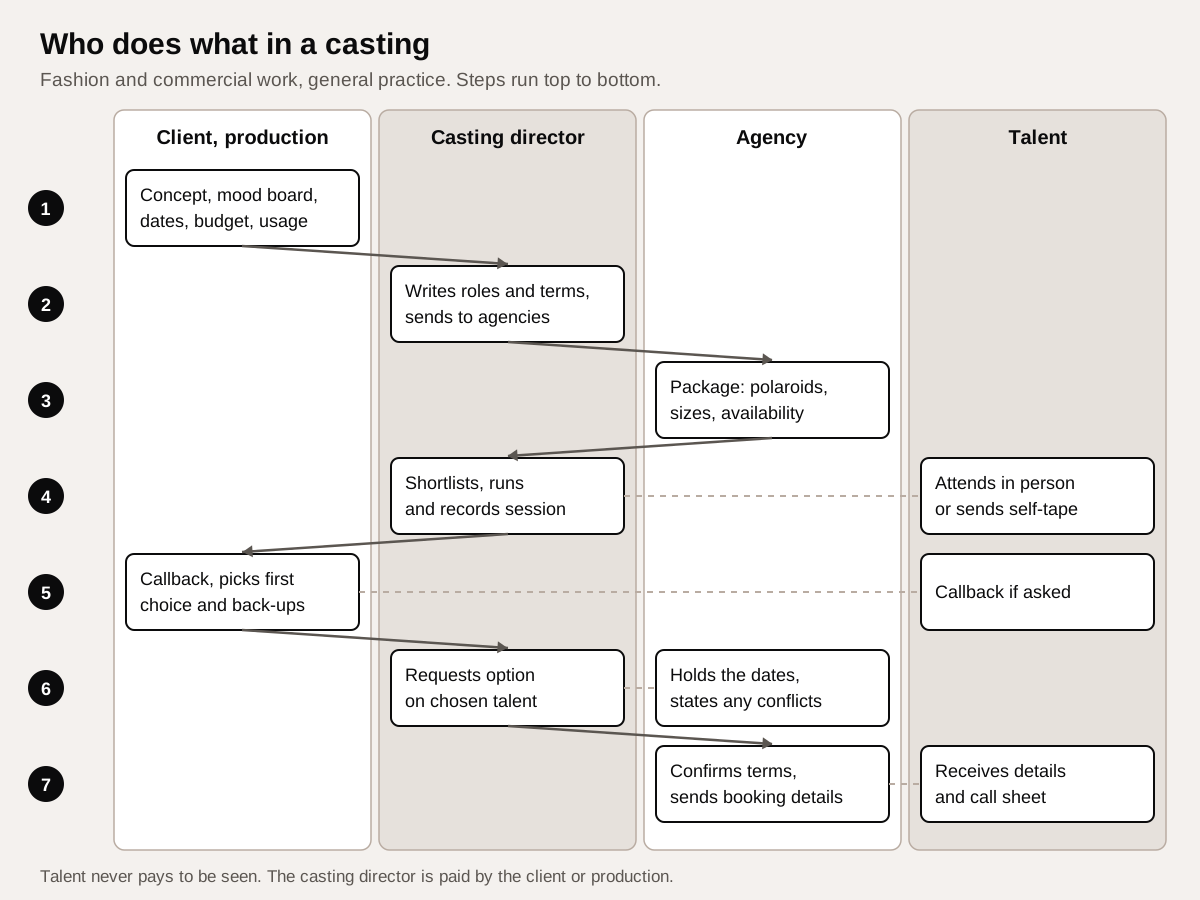
Two points in this sequence cause most friction. The first is the option: an agency holds a date for a client, which blocks other work. The CDG code asks its members to make sure a role is only ever on offer to one actor at a time, unless there are exceptional circumstances and all parties agree. The second is silence: talent and agencies hear nothing after a session. The same code asks casting directors to keep actors or their agents informed, and to let them know when they are no longer in the running.

How casting directors work with model and talent agencies
For agencies, the casting director is both a client and a gatekeeper. They decide which agencies receive the breakdown, which talent is seen and how fast the job moves. What they need from your bookers is consistent:
- Precision. Propose people who match the breakdown, not your whole board. Ten well-chosen faces beat forty loosely related ones.
- Speed. Breakdowns often have a same-day deadline. A package that arrives late is rarely opened.
- Current material. Recent polaroids, accurate measurements and true availability. Out-of-date pictures waste a casting slot and damage trust.
- Conflicts upfront. If a model has a competing campaign or an exclusivity, say so in the package.
- Clear terms. Rates, usage expectations and travel needs stated early, so the option does not collapse at confirmation.
Most of this is about how packages are built and sent. In Agency OS, a booker selects talent from current model profiles, builds a package and sends it to the casting director as a single link with polaroids, measurements and availability, and can see when it was opened. A demo walks through it. Whatever tool you use, the test is the same: can the casting director compare your proposals in under a minute?
Who pays the casting director, and who never should
A casting director is paid by the client or production, as a fee per project or as a member of staff at a studio, network or brand. They are not paid by talent, and in several places charging talent for access to auditions is restricted or unlawful.
The UK Casting Directors' Guild requires its members not to profit directly from an agency representing actors, children or background artists, and not to accept payment from actors or their agents for auditioning them, except for workshops or drama school training. In California, the Labor Code's definition of an audition expressly includes meeting or performing before a casting director, and the law prohibits advance-fee talent representation services, which includes charging an artist for procuring an audition.
The agency's income on the job comes from the talent fee and any agency fee charged to the client, under the terms of your contracts. Casting fees and agency commission are separate lines; keep them separate in quotes.
Try it: Commission split calculator, to show talent and clients how a confirmed fee splits between talent, agency and any partner agency.
Rules that shape a casting director's work
Casting is lightly regulated as a profession, but the people and jobs it touches are not. The rules differ by country and state, so agencies and casting directors should have their contracts and processes checked locally. Three examples show the range:
Professional codes in the UK
The CDG code sets out conduct for members: no personal information such as address, ethnicity or age asked during auditions except where age must be known for children or age-restricted products; data handled under data protection law; no fully nude auditions, and an intimacy coordinator or independent observer present if partial nudity is irrefutably required; permission sought before taped material is used beyond the original audition; and travel costs kept down, with producers reimbursing travel where appropriate.
Client duties in New York
Since June 19, 2025, the New York Fashion Workers Act places duties on clients as well as model management companies. Clients must pay models one and a half times the contracted hourly rate for work beyond eight hours in a 24-hour period, provide at least one 30-minute meal break on such days, allow models to bring their agent or other representative, provide liability insurance and obtain written approval before creating or using a model's digital replica. A casting director working for a client on a New York job should brief the client on these points before confirmation.
Children
Castings with minors bring licensing and chaperone rules that vary widely, from local authority licenses in England to entertainment work permits in California. The casting director usually flags them; the production holds the legal duty.
What skills does a casting director need?
The O*NET task list reads like a skills list: judging talent against a role, organizing large numbers of people, negotiating and keeping detailed records. In practice, the casting directors agencies trust most combine:
- An eye and a memory. Knowing faces across many agencies and remembering who fits what.
- Relationships. Bookers answer their calls first because the briefs are clear and the feedback is honest.
- Organization. Running sessions to time, tracking options across agencies and keeping files current.
- Negotiation. Balancing a client's budget against talent fees and usage without losing either side.
- Judgment and care. Running safe rooms, handling minors properly and protecting talent data.

How to become a casting director
Casting directors do not need a license in most places, and the route in is usually practical rather than academic: casting assistant, then associate, then casting director with your own credits. Bookers and agency assistants move into casting too, because they already know the talent and the agencies.
- Start as an assistant. With a casting office, a production company or a brand's in-house team. Expect scheduling, talent files, running sessions and filming.
- Learn the agencies. Know who represents whom, how each agency builds packages and which bookers to call for what.
- Build credits. Associate and co-casting credits on campaigns, commercials or productions.
- Join a professional body when eligible. The Casting Society requires at least 100 weeks of qualifying casting director experience in the last five years for full membership, and 75 weeks for associate casting directors. Extras casting and print work do not count. In the UK, CDG membership requires accepting its code of conduct.
- Specialize or broaden. Some stay in fashion shows and campaigns, others move between commercial and screen work.
On pay, official statistics are broad. The US Bureau of Labor Statistics reports casting under the wider group of producers and directors, whose median annual wage was $90,360 in May 2025. That figure covers many roles beyond casting, and casting fees vary by sector, market, project size and whether someone is freelance or on staff.
How your agency can work better with casting directors
- Keep profiles current. Polaroids refreshed every season or after any change in look, measurements checked, availability updated daily.
- Answer the breakdown, not the market. Read dates, usage and conflicts first, then propose only people who fit and are free.
- Send one clean package per role with a line on why each person fits.
- State terms early: rate expectations, usage, travel and any changes to appearance that need agreement.
- Confirm options in writing and release them promptly when a job moves on.
- Brief the talent with the mood board and call details once confirmed.
- Ask for feedback after castings and record it on the talent profile.
Try it: Call sheet template, for passing confirmed casting and shoot details to talent in one clear document.
Mistakes to avoid
- Sending the whole board. It signals you did not read the breakdown.
- Old polaroids. A model who looks different on the day wastes the slot and the casting director's credibility with the client.
- Hidden conflicts. Revealing a competing campaign after the option is placed damages the relationship for future jobs.
- Holding options without real availability. It blocks the client and your talent.
- Letting talent pay for access. Workshops sold as auditions are a reputational risk and, in some places, unlawful.
- No follow-up. Ask for feedback; it improves your next package.
For the agency side of the same process, see what a booking agent does, and for tools that hold profiles, packages and options in one place, casting and talent management software. Templates are in the toolkit.
Frequently asked questions
What is the difference between a casting director and a booking agent?
A casting director works for the client or production and finds the right people for a job. A booking agent works for the agency and its talent, proposing them for jobs and negotiating fees. O*NET lists both titles under the same talent director occupation, but they sit on opposite sides of the deal.
Do casting directors charge models or actors?
They should not. The UK Casting Directors' Guild bars members from accepting payment from actors or their agents for auditioning, and California prohibits advance-fee talent representation services, including charging artists to procure auditions. Casting directors are paid by the client or production.
How do I become a casting director?
Most people start as casting assistants, move up to associate and then cast under their own name. Agency bookers often make the move too. Professional bodies such as the Casting Society set experience thresholds for membership, such as 100 weeks of casting director credits in five years.
How much does a casting director earn?
It varies by sector, market and project size. The US Bureau of Labor Statistics reports casting under producers and directors, whose median annual wage was $90,360 in May 2025, but that group covers many roles beyond casting.
How do casting directors choose which agencies to contact?
Usually through relationships and track record: agencies that propose precisely, respond fast, keep material current and state conflicts upfront receive more breakdowns. New agencies build that trust one well-answered breakdown at a time.
What happens after a model is put on option by a casting director?
The agency holds the dates for that client. The casting director then confirms or releases the option. On confirmation, the agency agrees terms with the talent and sends the booking details; in New York, the model must also receive a deal memo before work begins.
Sources
- O*NET OnLine, Talent Directors (27-2012.04), 2026
- U.S. Bureau of Labor Statistics, Occupational Outlook Handbook, Producers and Directors, 2026
- Casting Society, Membership requirements and dues
- The Casting Directors' Guild, CDG Code of Conduct
- New York State Department of Labor, Responsibilities of Fashion Management and Clients, 2025
- California Labor Commissioner's Office, Legislation affecting fee-related and advance-fee talent services, 2009