Open Casting Call: How Agencies Plan, Run and Follow Up
How agencies and brands run an open casting call: the brief, venue, online or in person, safeguarding, polaroids, fair selection and follow-up.
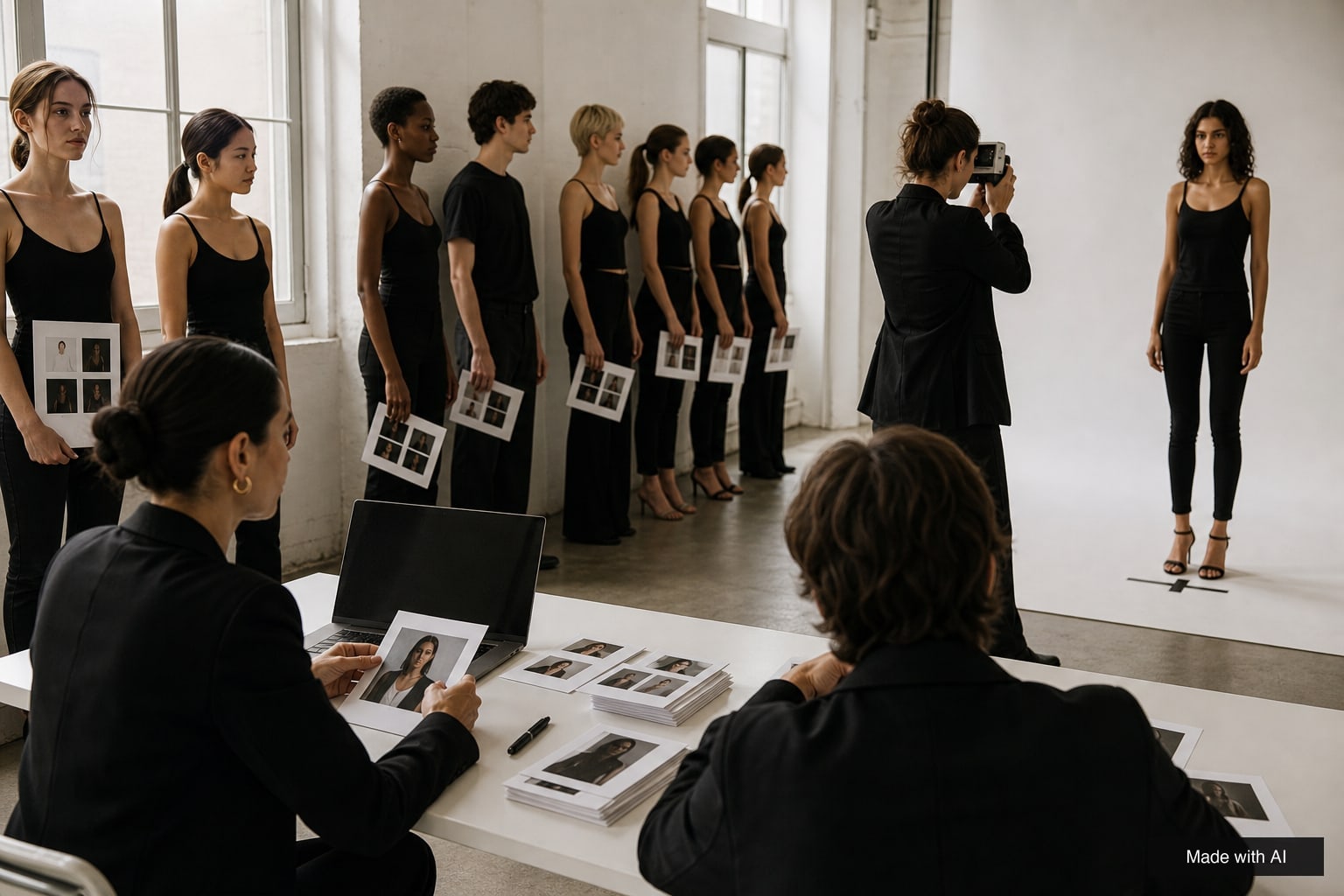
An open casting call is the most visible thing a model or talent agency does. For one afternoon your doors, or your inbox, are open to anyone who matches a brief, and every person who comes judges your agency by how the day runs. Done well, an open call finds faces your scouts would never meet and shows the market that you treat newcomers properly. Done badly, it produces a crowded corridor, a folder of unusable photos and complaints that follow you for years.
This guide is for agency owners, bookers and the brands and producers who run open calls with them. It covers the whole cycle: the brief, the venue, online versus in person, safeguarding and fees, polaroids, selection and the follow-up most teams forget. If you are preparing the people who attend, our sister magazine covers that side in how to prepare for a model casting.
In short
- An open call starts with a written brief: who you are looking for, what the work is and what happens to applicants afterwards.
- Online pre-registration with timed slots prevents queues and gives you consent and guardian details before anyone arrives.
- Never charge attendance, registration or photo fees. In Great Britain and California the law restricts or bans such fees.
- Polaroids, a short conversation and notes against the brief are enough to select. Tell every applicant the outcome.
What is an open casting call, and when is it worth running one?
An open casting call is a session where anyone who fits a published brief can apply or attend without being represented or invited. A closed casting, by contrast, sees only the talent that agencies have proposed, and a go-see is a represented model visiting a client one to one.
Agencies run open calls for three reasons. Development: finding new faces for the board, often in a region your scouts rarely reach. A specific job: a brand wants real people, an age group or a local community the board does not cover. Visibility: an open call shows parents and the local market that there is a legitimate route into the industry that does not involve paying anyone.
It is not worth running when the brief is vague or when you do not have the staff to reply to everyone. A small session with forty pre-registered people is more useful than a walk-in day that leaves hundreds standing in the street.
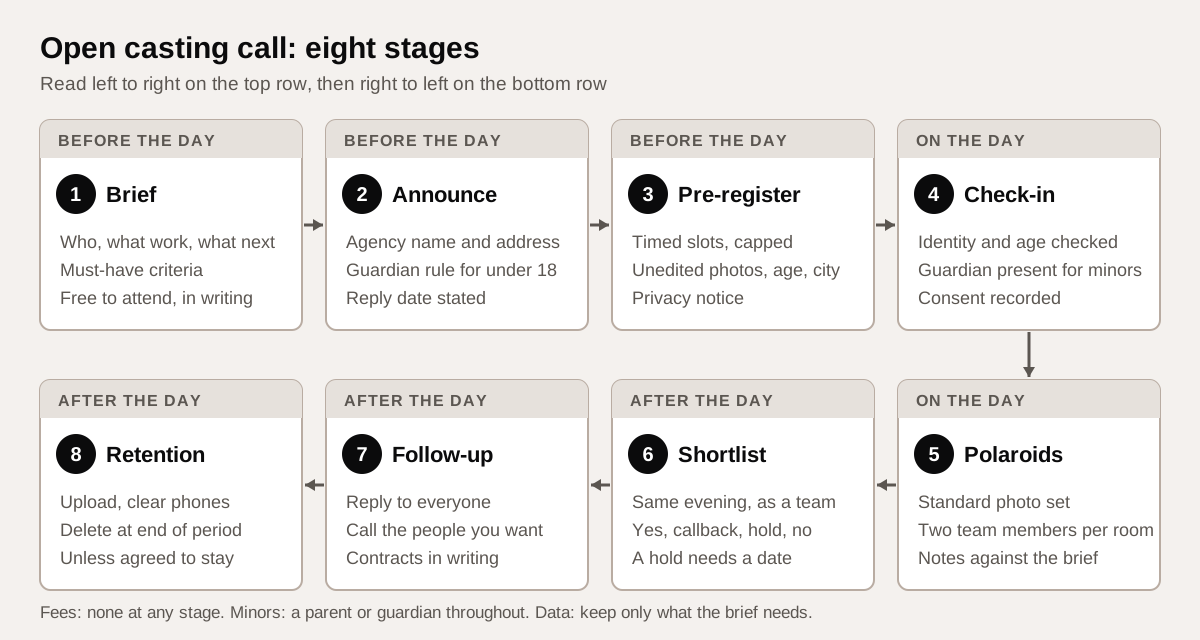
How to write the brief for an open call
Write the brief before you book a room, so that someone with no industry knowledge can decide in one minute whether to apply. It should answer:
- Who runs the call. Agency or brand name, a registered address and a contact email. Anonymous calls are what scams look like.
- Who you are looking for. Age range and genuine requirements of the work, written as needs. "Aged 18 to 30, comfortable on camera, available in June" is useful. Long measurement lists usually are not, and can create discrimination risk if they are not tied to the job.
- What the work is. Representation, a campaign, a show or a commercial, and when it shoots if it is paid.
- What to bring. Fitted plain clothes, photo ID and a guardian for anyone under 18. Say "no professional photos needed".
- What it costs. Nothing, stated in plain words.
- What happens next. When you will reply, and how long you keep photos and details.
Keep a one-page internal version for the team: the roles, must-have and nice-to-have criteria, and who has the final say. It becomes the scoring sheet later.
Online, in person or hybrid: which format fits?
Most agencies now run part of the call online. The right mix depends on how many applicants you expect and how much the brief depends on seeing people move.
| Format | Works best for | Main strengths | Main risks |
|---|---|---|---|
| Online only (form, photos, short video) | New faces for the board, wide reach | No queue, applicants self-select, easy to compare | Filtered photos, identity and age harder to confirm |
| In person, walk-in | Community castings, press events | See people as they are, instant shortlist | Uncontrolled numbers, long waits, harder safeguarding |
| In person, pre-registered slots | Most agency open calls | Predictable numbers, consent collected in advance | No-shows; needs a booking system |
| Hybrid (online round, in-person callback) | Paid jobs with short deadlines, larger searches | Small, well-prepared callback day | Two stages to communicate clearly |
For most agencies the hybrid route is the safest default. The online round asks for two or three unedited phone photos, height, city, age and, for minors, a guardian's contact. You review those against the brief and invite a shortlist to timed slots.
The online stage is where software saves the most time. In Agency OS, the embedded application form on your website feeds every applicant into the same list as your existing talent, with photos, consent and status in one record, so shortlists and replies come from one place. A short demo shows the flow.
Choosing a location and planning the day
Use a studio, your office or a hired space with a separate waiting area, a private room for photos and toilets that do not require walking through the casting room. Avoid hotel rooms and private homes. The UK Casting Directors' Guild advises members that no audition should take place in a private home rather than a dedicated studio space, and that rule suits model castings too.
Staffing the day
- Check-in. Confirms identity and age, checks guardians for minors, takes consent, hands out numbers.
- Floor manager. Keeps slots on time and is the named person anyone can go to with a concern.
- Photographer. Usually a booker with a phone or small camera.
- Decision makers. Two bookers, or a booker and the client, taking notes against the brief.
Plan timings like a shoot. As an example, fifteen-minute slots for groups of five give each person time to walk, be photographed and talk. Build in team breaks and send a running order the day before.
Try it: Call sheet template, a ready layout for the running order, venue details, roles and contact numbers for the day.

Safeguarding at an open casting call: minors, chaperones and fees
Open calls attract young people, and that is where the legal and ethical risk sits. Rules differ by country, so treat this as an overview and have your process checked by a local adviser.
Minors and guardians
Anyone under 18 attends with a parent or legal guardian who stays with them throughout, including during photos. Nobody under 18 changes clothes on site, and no one is photographed in underwear or swimwear at an open call.
The open call itself is usually not licensed, but the work that follows can be. In England, Department for Education guidance explains that a local authority license is needed before a child of compulsory school age takes part in modeling for which payment is made. In California, all minors working in entertainment must register for an entertainment work permit, and applicants aged 14 to 17 must first complete sexual harassment prevention training. If you are casting children for a paid job, plan licensing before you announce the call.
Conduct in the room
The Casting Directors' Guild code of conduct says performers should not be asked for personal information such as address, personal phone numbers or ethnicity during auditions, with actual age asked only when casting children or for age-restricted products. It also says anyone running a children's session unsupervised should hold an enhanced DBS check, otherwise another adult must be present. Two team members in every room is a simple rule that protects both sides.
Fees: the line you never cross
A legitimate open call is free. Charging for registration, test shoots, portfolios or a place on your website is the clearest sign of a scam, and in places it is unlawful. In Great Britain, the Conduct of Employment Agencies and Employment Businesses Regulations 2003 restrict fees to work-seekers, and the exception allowing some agencies to charge for inclusion in a publication expressly excludes photographic and fashion models. California's Labor Code prohibits advance-fee talent representation services, which covers charging an artist for photographs, training or audition procurement. Say "free to attend" in every announcement.
Polaroids, consent and data: what to capture and keep
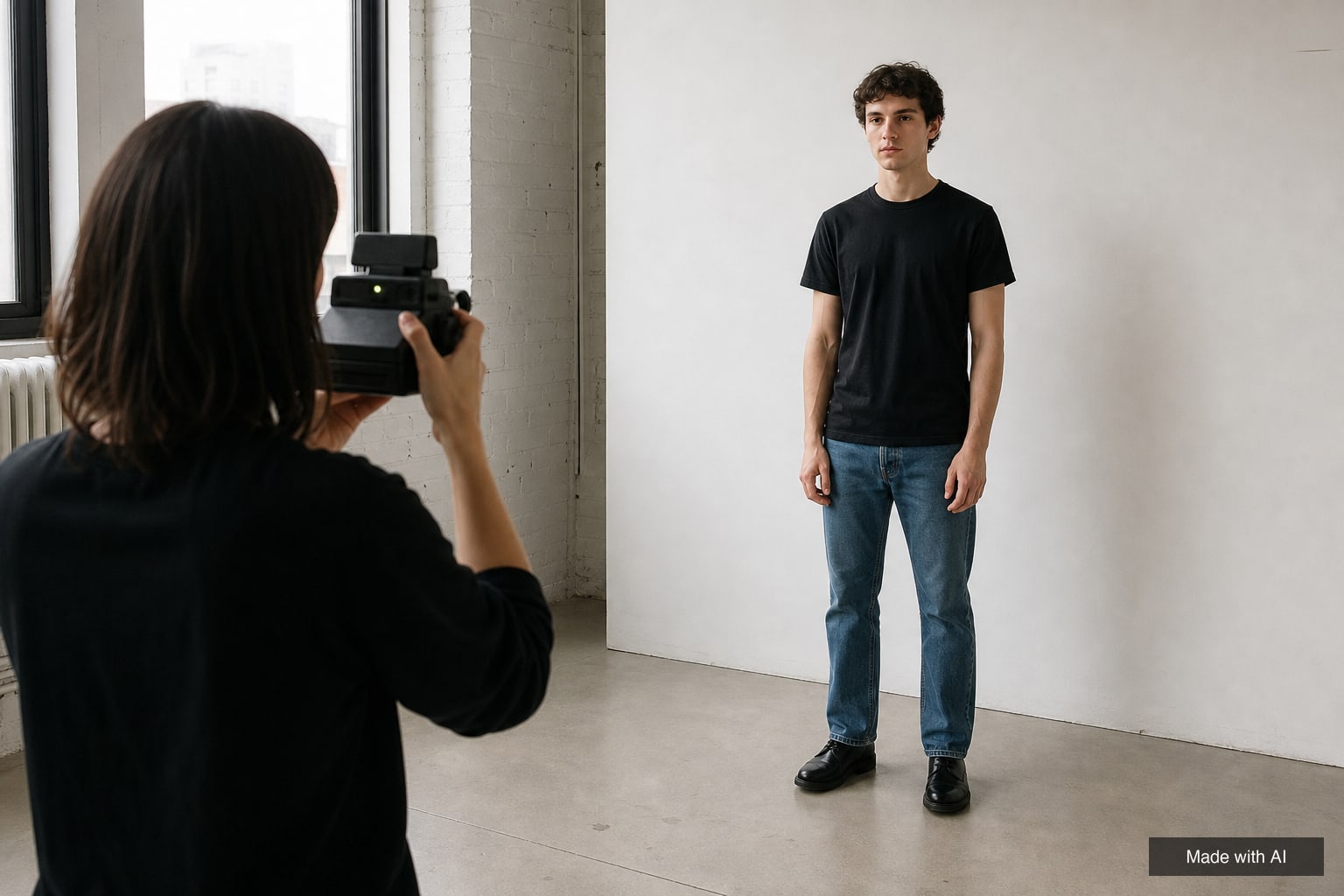
Digital polaroids are the only images you need. Keep them consistent so you can compare fairly:
- A plain light wall, even light, no filters.
- Fitted plain clothing: a black or white t-shirt and jeans.
- A standard set: full length front and side, waist up, and face front and profile with the full head in frame.
- Height measured by your team. Other measurements only if the brief needs them, fully clothed.
- A short video of a walk or a few words to camera for commercial or social work.
Name files by applicant number and upload to one system before the end of the day, then delete them from personal phones. In the EU and UK, the GDPR applies to every name, photo and date of birth you collect. Its principles of purpose limitation, data minimization and storage limitation translate into three rules: say on the form why you collect the data, collect only what the first round needs, and set a retention period after which unsuccessful applications are deleted unless the person agreed to stay on file.
Using an open call image publicly, for example in a "new faces" post, is a different purpose and needs separate, clear permission.
Try it: Model release form, a starting point for the separate permission you need before using any open call image outside casting.
How to select talent at an open call
Selection goes wrong when it relies on memory. Use the internal brief as a scoring sheet and write notes while each person is in front of you:
- Brief fit. Age range, availability, location and any real physical requirement of the job.
- Camera presence. How they read in polaroids and video compared with in the room.
- Professional readiness. Punctuality, how they take direction, school or work commitments.
- Development potential. Could you send them to tests and clients within a season?
Agree the shortlist the same evening with polaroids side by side. Mark each person yes, callback, hold or no, and only use "hold" with a reason and a decision date.
For a client job, send the shortlist as a package with consistent polaroids, height and availability. For board development, plan each yes before you call: a meeting with parents, an agency-paid test shoot or a contract discussion. When comp cards are needed later, a dedicated service such as composite cards keeps the format consistent.

Follow-up: how to tell people the outcome
Every applicant should hear from you by the date you promised, even if the answer is no. Thank them, say they were not selected for this brief, say whether you keep their details and for how long, and how to ask for deletion.
Call the people you want, and speak to the parent or guardian for anyone under 18. Send any contract in writing with time to take advice, and never ask anyone to sign at the call. If they ask what fair terms look like, the model-side guide to the modeling contract is a neutral starting point. Review the day as a team within a week: registrations, attendance, shortlist, signings and what to change.
How to run an open casting call: step-by-step checklist
- Six to eight weeks before. Write the public brief and the scoring sheet. Decide format, slot numbers and decision makers.
- Five weeks before. Book a venue with a waiting area and private photo room. Confirm accessibility.
- Four weeks before. Publish the call with your name, address, "free to attend" and the guardian rule. Open pre-registration with a privacy notice.
- Two weeks before. Cap registration, review applications, invite the shortlist to timed slots.
- The week before. Send the running order and roles. Prepare check-in forms, numbers, a height chart and the photo set-up.
- On the day. Check identity, age and guardians, take consent, shoot the standard polaroid set, take notes, keep two team members in every room.
- That evening. Upload images, clear personal phones, agree the shortlist.
- By the promised date. Reply to everyone and send contracts in writing.
- End of retention period. Delete unsuccessful applications unless the person agreed to stay on file.
Mistakes to avoid
- A vague brief. "New faces wanted" brings everyone and helps no one.
- Walk-in only for a popular call. Queues in the street are a safety and reputation risk.
- Any fee, anywhere. Including "optional" test shoots with a partner photographer on the day.
- Inconsistent polaroids. Different light and clothes make fair comparison impossible.
- One adult alone with an applicant. Always two team members, and a guardian for minors.
- Silence after the call. The most common complaint about open calls.
- Keeping everything forever. Old applications are a data liability, not an asset.
Open calls are one of the routes covered in our guide to the model scout, and the people you sign are booked through the process in what a booking agent does. For handling applications at volume, see casting and talent management software, and all templates in the toolkit.
Frequently asked questions
What is the difference between an open casting call and a closed casting?
An open casting call is open to anyone who fits the published brief, represented or not. A closed casting sees only talent that agencies proposed or the casting director invited. Agencies use open calls to find new people; clients use closed castings to choose between professionals.
Can an agency charge people to attend an open call?
It should not, and in some places it is unlawful. In Great Britain the 2003 Conduct Regulations restrict fees to work-seekers, and the paid publication exception does not apply to photographic and fashion models. California prohibits advance-fee talent representation services. Agencies earn commission from paid work, not from applicants.
Do minors need a chaperone at an open casting call?
Agencies commonly require a parent or legal guardian for anyone under 18 throughout the session. Licensing and chaperone rules for the paid work that follows depend on the country, for example local authority licenses in England and entertainment work permits in California.
How many people should we invite to an in-person open call?
Work it out from your team and slot length. As a worked example, two decision makers seeing groups of five every fifteen minutes meet about twenty people an hour. Plan from the staff you have, not from how many applied.
How long can we keep photos from an open call?
Under the GDPR, personal data should be kept no longer than necessary for its purpose. Set a retention period in your privacy notice, such as the end of the season, and delete unsuccessful applications after it unless the person agreed to stay on file.
Should an open call be online or in person?
For most agencies a hybrid works best: an online first round with unedited photos, then an in-person callback for a shortlist. Fully online suits wide searches; in person suits community castings and jobs that depend on movement.
Sources
- GOV.UK, Department for Education, Child performance and activities: licensing legislation, 2015
- legislation.gov.uk, The Conduct of Employment Agencies and Employment Businesses Regulations 2003, regulation 26
- California Labor Commissioner's Office, Legislation affecting fee-related and advance-fee talent services, 2009
- California Labor Commissioner's Office, Entertainment work permit for minors
- The Casting Directors' Guild, CDG Code of Conduct
- EUR-Lex, Regulation (EU) 2016/679, General Data Protection Regulation, 2016