Mood Board Template for a Fashion Shoot: What to Include
A mood board template for fashion shoots from the agency side: light, casting, wardrobe, hair and make-up, location, and how bookers use it to pick talent.
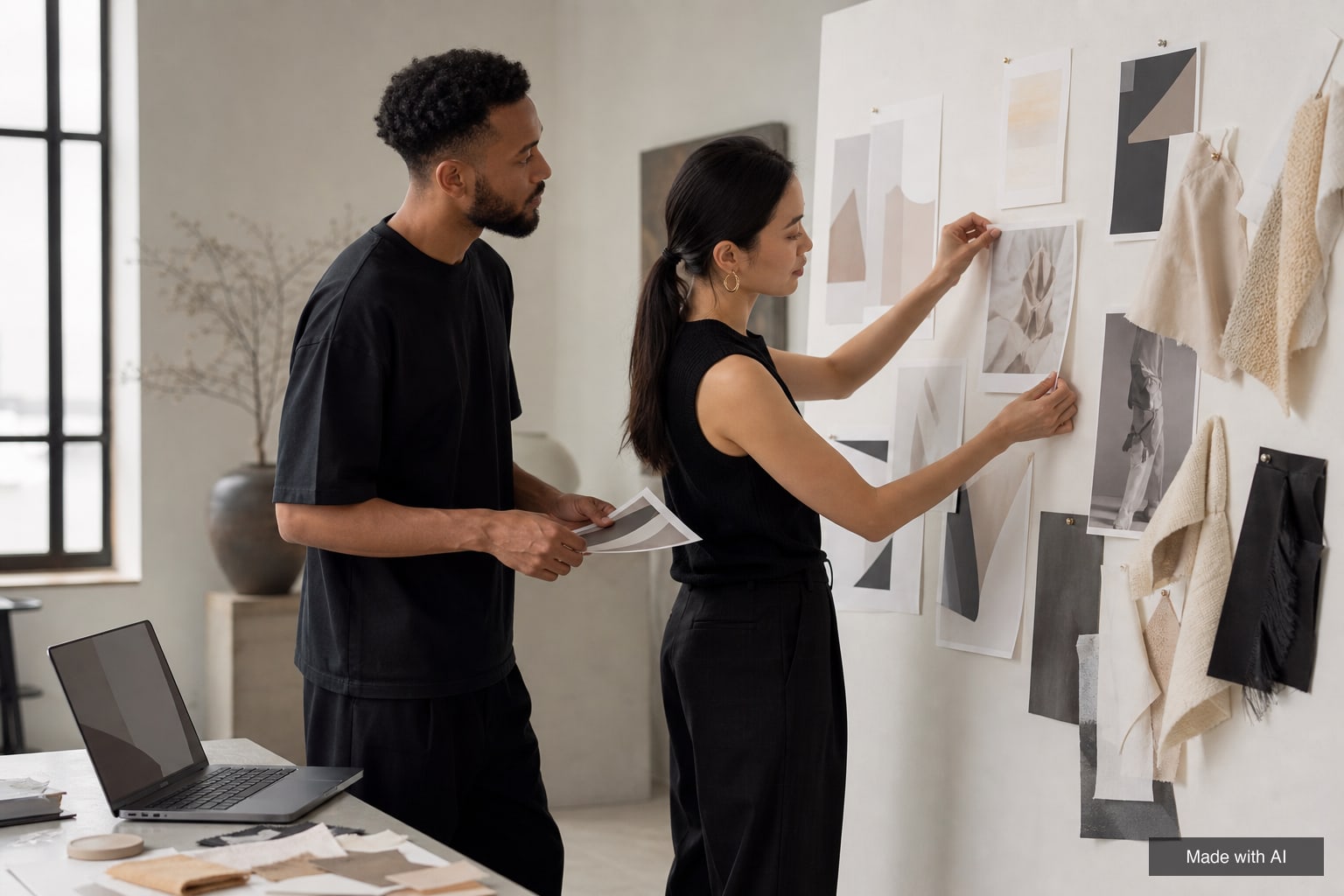
A good mood board template saves a fashion shoot more money than any other document in pre-production. It is where the photographer, stylist, client and agency agree what the pictures will look like before anyone is booked, and it is the page your bookers read when they decide which talent to propose. When the board is clear, options go to the right people, wardrobe arrives in the right sizes and the shoot day runs to plan. When it is a loose collection of pretty images, every department guesses, and the guesses rarely match.
This guide looks at the mood board from the business side: what a fashion mood board should contain, how each panel is used, how bookers turn it into casting decisions, and what to watch for with image rights. If you are a model building your own book, the model-side guide to the modeling portfolio covers that.
In short
- A fashion mood board is a working brief in pictures: concept, light, color, casting, wardrobe, hair and make-up, location and logistics.
- Every image on the board should be there for one reason, written in a short caption.
- Bookers use the casting and logistics panels to choose who to propose, so describe the look and the job, not a specific person's body.
- Reference images belong to their owners. Keep the board private and never publish or copy a reference as the final image.
What is a mood board for a fashion shoot?
A mood board is a single page, or a short deck, that shows the intended look and feeling of a shoot through reference images, color, texture and a few words. In fashion it does three jobs at once. It is a creative proposal the photographer or creative director uses to win and align the client. It is a briefing document for the stylist, hair and make-up artists, set designer and lighting team. And it is a casting brief: the page an agency reads to understand what kind of talent the shoot needs.
That third job is the one most boards neglect. A board built only to inspire the client tells a booker almost nothing about the person they should propose, the hours involved or where the pictures will be used. A board built as a template, with fixed panels, answers those questions every time.
What to include in a mood board template
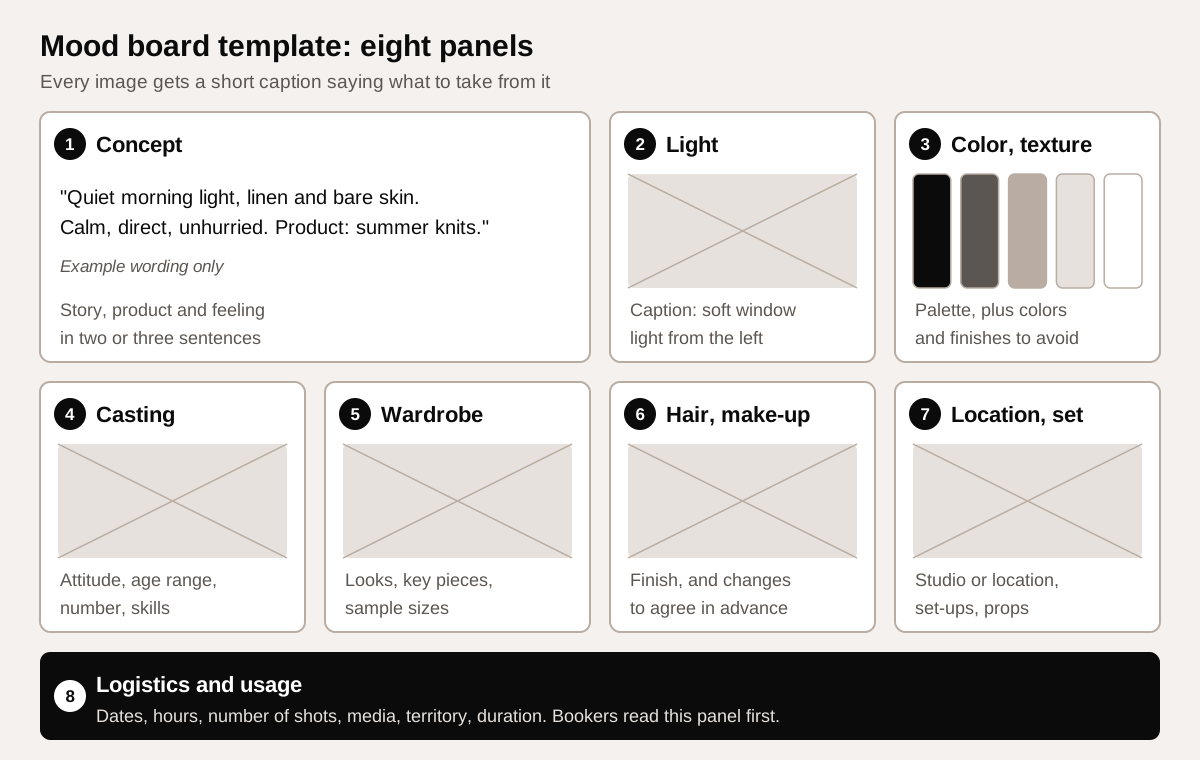
The panels below cover what each department needs. Not every shoot needs all eight, but leaving a panel empty should be a decision, not an accident.
| Panel | What it shows | Who relies on it |
|---|---|---|
| Concept | Two or three sentences on the story, the product and the feeling | Everyone, the client first |
| Light | Hard or soft, direction, time of day, studio or daylight | Photographer, lighting assistant, location scout |
| Color and texture | Palette, fabrics, surfaces, film or digital look | Stylist, set designer, retoucher |
| Casting | Attitude, age range, look, number of people, any skills | Casting director, bookers |
| Wardrobe | Silhouettes, key pieces, how many looks, sizes available | Stylist, bookers, talent |
| Hair and make-up | Finish, products to avoid, any cut or color change | Hair and make-up artists, bookers, talent |
| Location and set | Studio or location, interiors or exteriors, props | Producer, location scout, set designer |
| Logistics and usage | Date, hours, number of shots, intended media and territory | Producer, bookers, client |
Give each image a caption of a few words: "this light", "this attitude, not this styling", "collar shape only". Captions stop people from reading the wrong thing into a reference, which is the most common reason boards fail.
Light and color: how to show the look
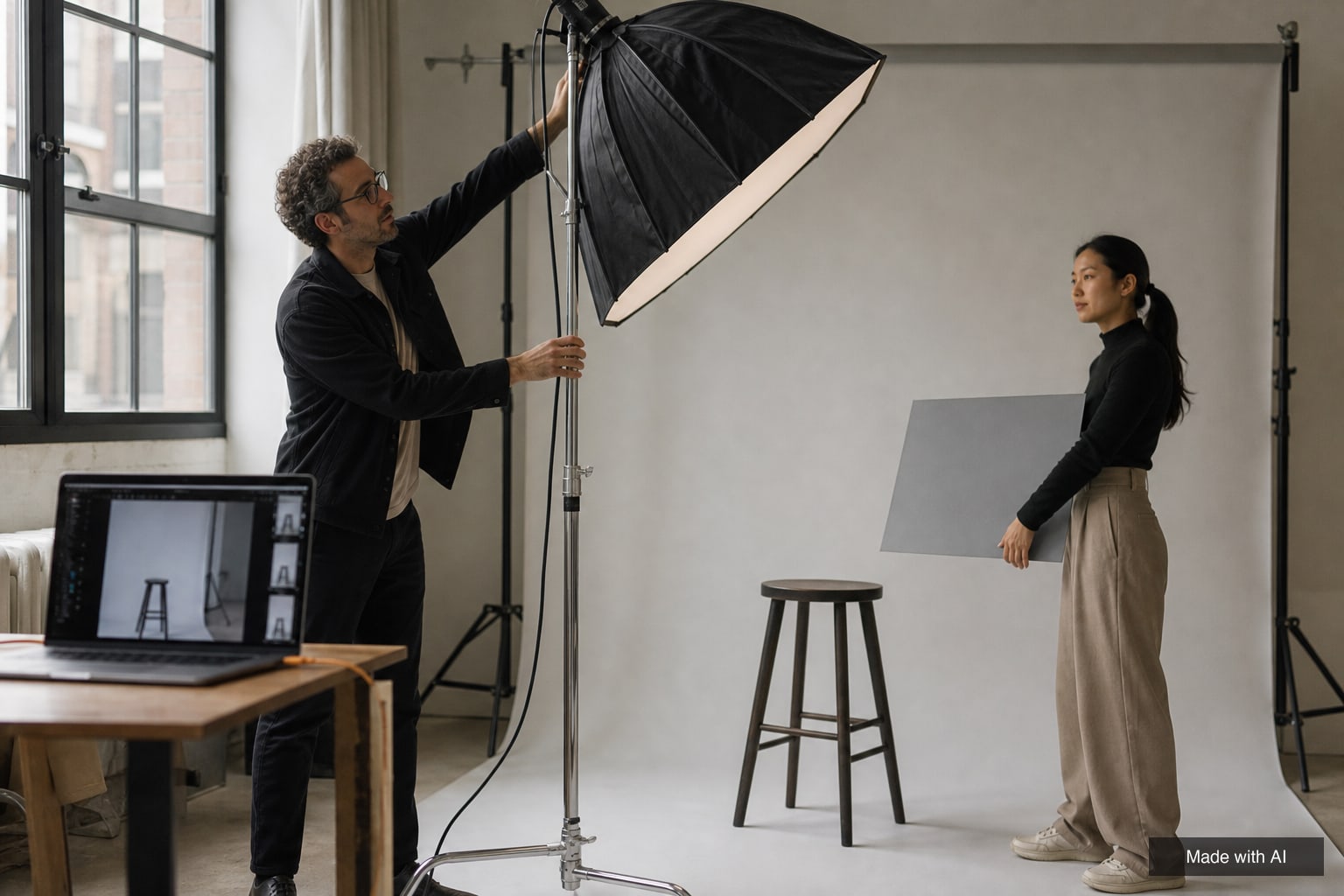
Light is the panel photographers care about most and clients understand least, so show it with images rather than terms. Choose two or three references where the light is clearly visible on a face and on fabric: hard sun with sharp shadows, soft window light, flash against a dark background. If the shoot is on location, add a note on time of day, because a golden-hour look cannot be shot at noon.
The lighting reference also affects casting and booking. A daylight exterior with a short window means a tighter schedule and an earlier call time, which your bookers need to know before they put options on anyone. A low-key studio look may need longer set-up, which changes the hours in the booking.
For color, a strip of four to six swatches next to the references is more useful than a long description. Include the colors to avoid, especially if the product sits close to a skin tone or the background. Texture references, such as a matte knit, wet hair or glossy skin, belong here too. They tell the stylist and make-up artist what finish to aim for and tell the retoucher how far to go.
Casting references: how to describe the talent you need
The casting panel is where agencies make or lose time. A board that shows six photos of one famous model and says "like her" produces packages full of near look-alikes and leaves out people who would suit the shoot better. A board that shows attitude, energy and context gives your bookers something to work with.
Write the casting panel as a short brief:
- Attitude and energy. "Calm, direct gaze", "playful movement", "editorial, not commercial smile".
- Number and mix. How many people, whether they appear together, and any range you want across the group.
- Age range and look. Stated openly, so bookers can propose with confidence.
- Skills. Movement, dance, riding, swimming, speaking lines on camera for social content.
- Practical limits. Sample sizes if wardrobe is fixed, tattoos visible or covered, hair that will or will not be changed.
Use references for mood and pose rather than identity. If you include images of real people, caption them by what you want from the image ("this posture", "this crop") so nobody reads them as a request to find a double.
Two topics deserve a line of their own when relevant. If the concept involves nudity or implied nudity, say so on the board, so the agency can discuss it with the talent before any option, and so consent is in writing. If the client intends to create AI-generated or digitally altered versions of the talent, say that too. In New York, the Fashion Workers Act requires clear written consent from a model before a client creates or uses their digital replica, detailing scope, purpose, rate of pay and duration. Similar expectations are spreading elsewhere, and agencies everywhere will ask.
Wardrobe, hair and make-up: references that prevent surprises
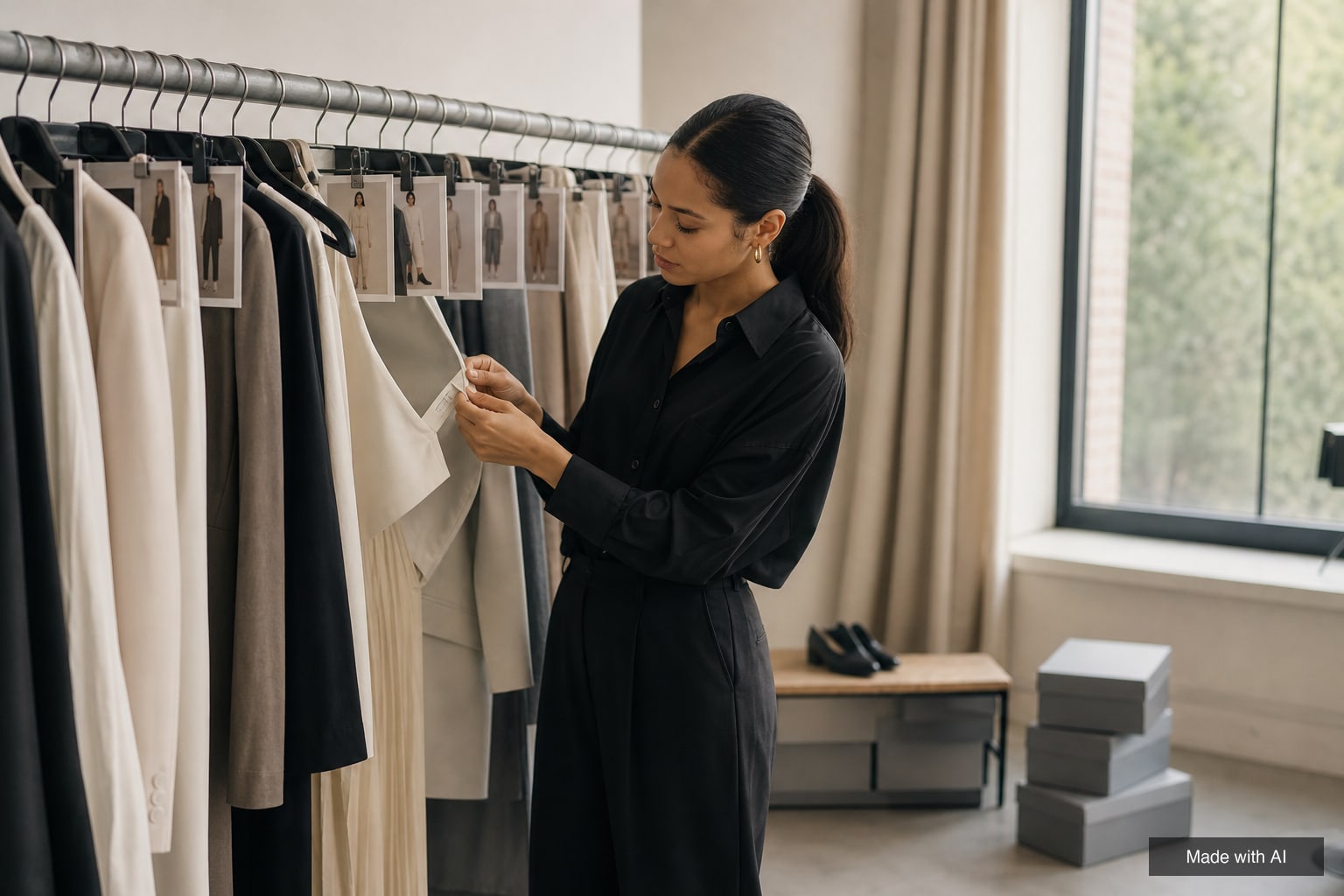
Wardrobe and grooming are where a beautiful board turns into a problem on set. The stylist's references show silhouettes and key pieces; the board should also say how many looks are planned and whether the clothes are samples in a fixed size. Fixed samples narrow the casting immediately, and bookers need to know before they propose.
For hair and make-up, separate the finish from changes to the person. A "wet look" or "bare skin" finish is a styling decision. A haircut, color change, eyebrow bleach or anything lasting beyond the day is a change to the talent, and agencies commonly treat it as something to agree and price in advance. Mark those clearly so the agency can check with the talent and with any other clients who have options on the same person.
List known product restrictions as well, such as fragrance-free products for a skincare client, so allergies can be raised before the day.
Location and set: what the board must tell the team
The location panel shows the space and the props, and it carries practical information the creative images hide. Studio or location, indoor or outdoor, and how many set-ups in a day all affect hours, travel and weather risk. For an outdoor shoot, add a weather alternative so bookers can mention it when confirming, and note any changing facilities so talent and agencies know what to expect.
How bookers use a mood board to pick and propose talent
When a board lands at an agency, your bookers read it in a particular order. First, the logistics and usage panel: dates, hours, where the images will run and for how long. That decides whether the job is viable, what to quote and who is available. Usage drives a large part of the fee, so a board that says "social only, three months, one country" lets the agency quote properly; see usage and buyout fees for how that works.
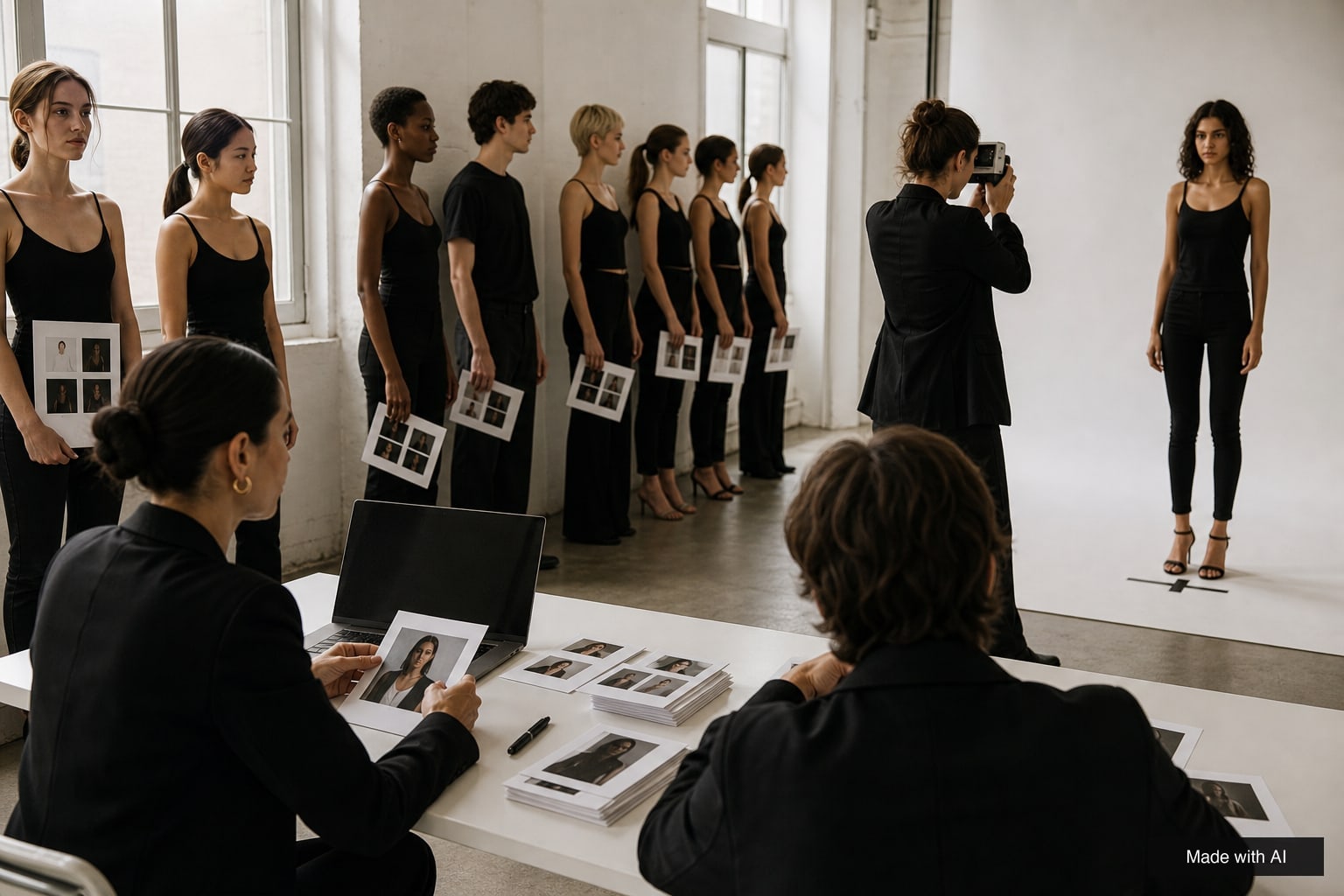
Next, the casting and wardrobe panels: attitude, age range, skills, fixed sample sizes. From these, bookers draw a longlist from the board, check availability and put options on the strongest people. Then they look at hair, make-up and any changes to the talent, and check those with each person before proposing them.
Finally, they build the package. A good package answers the board directly: polaroids that match the light and attitude, a short note on why each person fits, current measurements and availability for the shoot dates. In Agency OS, a booker can build that package from model profiles and send it to the client as one link, so the client compares the proposals against the board on one screen and the agency sees what was opened. You can see it in a demo.
The mood board also travels with the booking once it is confirmed. Attach it to the confirmation so the talent knows what to expect, and reference it on the call sheet.
Can you use other people's images in a mood board?
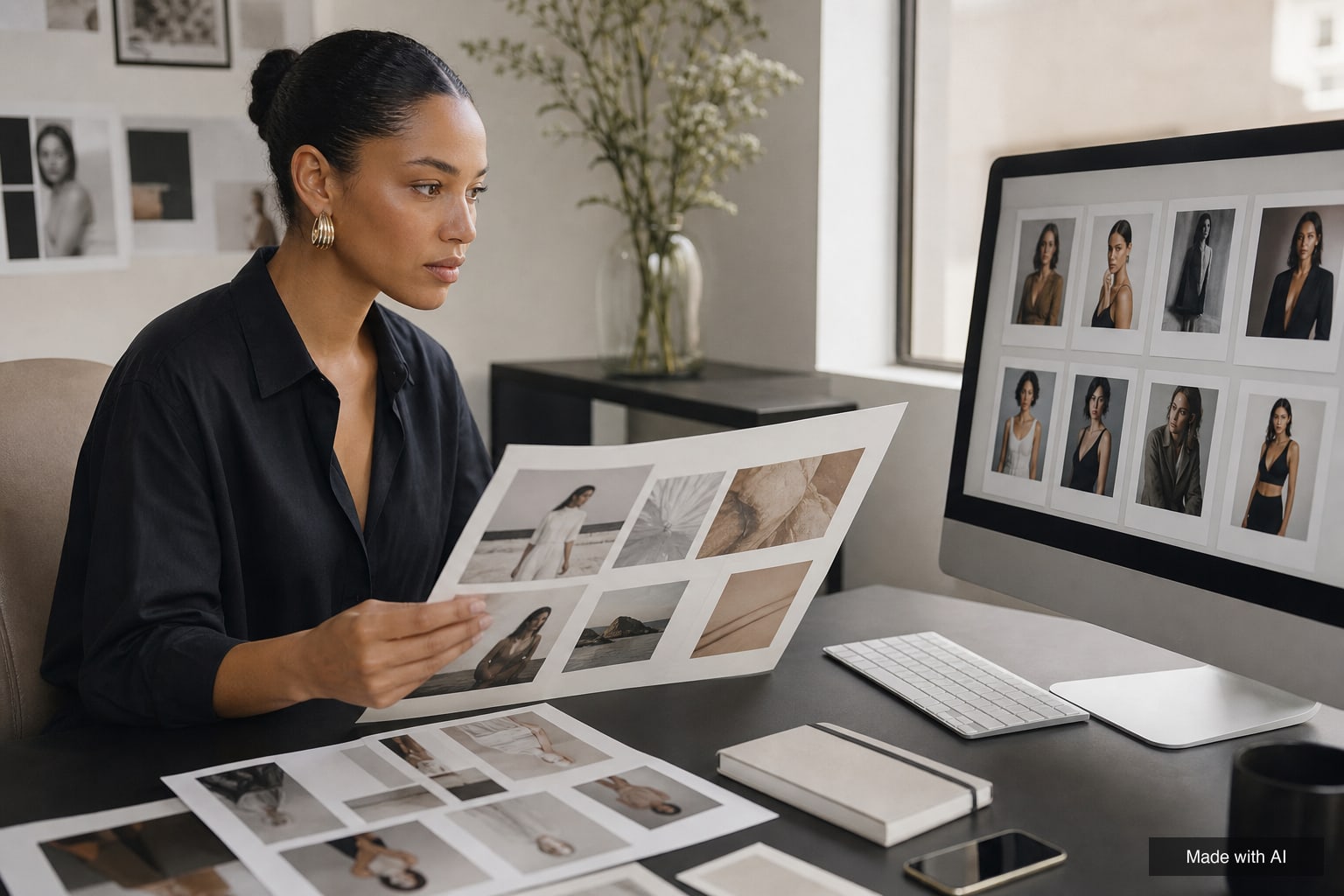
Almost every fashion mood board uses photographs that belong to someone else, and that is general industry practice for internal planning. It is still worth knowing where the legal lines are, because the rules differ by country. Have anything unusual checked by a local adviser.
- United States. The US Copyright Office explains that fair use is weighed on four factors, including whether the use is commercial and how much of the work is used, and that courts decide it case by case. There is no blanket rule that internal mood boards are fair use.
- United Kingdom. The Intellectual Property Office describes copyright exceptions as limited, such as fair dealing for criticism, review or quotation and for non-commercial research or private study. A commercial shoot board does not fit neatly into any of them.
- EU. Exceptions vary by member state; the same caution applies.
Practical rules follow. Keep boards private: share them by invitation, not as public links. Platform tools support this; Pinterest, for example, states that only the owner and invited people can see a private board. Credit the photographer where you know it. Never publish the board or use a reference in a pitch deck that goes public. And never brief a team to recreate a specific photograph shot for shot: use references for mood, light and pose, then make your own picture.
Images of talent are personal data as well as copyright works. Polaroids your agency sends for a board should be used only for that casting. Under the EU and UK GDPR, data must be collected for specified purposes and not reused in incompatible ways, so a client should not reuse proposals in unrelated decks.
Rights in the final images are a separate question: the release and usage terms in the booking. The model release form template is a starting point.
How to build a mood board template step by step
- Start from the brief, not the images. Write the concept in two or three sentences and list the deliverables: number of images, formats, media.
- Set up the eight panels in a fixed layout you reuse for every shoot.
- Collect widely, then cut hard. Gather twenty or thirty references, keep the six to twelve that each do one job.
- Caption every image with what to take from it and, where useful, what to ignore.
- Fill the practical panels: casting brief, sample sizes, hair and make-up changes, location, dates, hours, usage.
- Flag sensitive points: nudity or implied nudity, minors, digital replicas, lasting changes to appearance.
- Share privately with the client, creative team and the agencies you want proposals from, with a deadline for questions.
- Version it. Date the board and note changes, so a package proposed on version one is not judged against version three.
- Carry it into the call sheet and the booking confirmation.
Try it: Call sheet template, the next document after the board, with space to link the final mood board for crew and talent.
Mistakes to avoid
- No captions. People read different things into the same image.
- One famous face as the casting brief. You get look-alikes instead of the best fit.
- Hidden logistics. Without dates, hours and usage, bookers cannot quote or option anyone.
- Surprise changes on set. Haircuts, color changes and nudity must be on the board and agreed in advance.
- Too many references. Forty images with no hierarchy is a scrapbook, not a brief.
- Public boards. Sharing others' images publicly creates rights risk and shows unreleased plans.
- Silent revisions. Changing the concept after options are placed without telling the agencies.
The board is the first document in a chain that runs through casting, booking and the shoot day. See what a casting director does for the next step, what a booking agent does for how options are placed, and the toolkit for templates.
Frequently asked questions
What should a fashion mood board include?
At minimum: the concept, light, color and texture, casting, wardrobe, hair and make-up, location and logistics, including dates, hours and intended usage. Each image should carry a short caption saying why it is there.
How many images should a mood board have?
There is no fixed number. Many teams keep six to twelve references per board or per look, enough to show each panel clearly without turning the board into a scrapbook. If an image does not do a job, remove it.
Who makes the mood board for a fashion shoot?
Usually the photographer or creative director, with input from the stylist and client. On larger productions a producer or art director owns it. Agencies rarely make it, but they rely on it to propose talent and to quote.
Is it legal to use other photographers' images on a mood board?
Using references for private, internal planning is common practice, but it is not automatically covered by fair use in the US or by the limited exceptions in the UK. Keep boards private, credit where you can, never publish them and never recreate a specific photo.
How do agencies use a mood board to choose models?
Bookers read logistics and usage first, then the casting, wardrobe and grooming panels. They check availability, option the best matches, confirm any changes with the talent, then send a package that answers the board directly.
Should the mood board be shared with the talent?
Yes, once the booking is confirmed. It tells the talent what to expect, raises allergy or styling concerns early and avoids surprises on set. Attach it to the confirmation and link it from the call sheet.
Sources
- U.S. Copyright Office, Fair Use Index
- GOV.UK, Intellectual Property Office, Exceptions to copyright
- New York State Department of Labor, Responsibilities of Fashion Management and Clients, Fashion Workers Act, 2025
- EUR-Lex, Regulation (EU) 2016/679, General Data Protection Regulation, 2016
- Pinterest Help, Private boards